Using the right hybrid game mechanics is essential for creating an addictive game that players can’t help but love. Today, we’re spotlighting three standout mechanics that have proven to hook players and entice them to stick around: Match, Multiple Choice, and Resource Management. These mechanics aren’t just about entertainment; they’re about creating moments of strategy and satisfaction. Let’s explore what makes them so compelling and how you can refine them to create memorable game experiences.
1. Match mechanics: The urge to clear the board
Match mechanics are a classic for a reason: they appeal to our innate desire to organize, clean, and create order. Whether it’s matching colors, shapes, or patterns, these games provide a fulfilling cycle of small successes and escalating challenges. The satisfaction of clearing a level or completing a pattern is often paired with visual and auditory feedback, creating a mini-gratification loop that is hard to resist.
For example, in Screw Master 3D: Pin Puzzle, players match screws of the same color to corresponding toolboxes. The screws are embedded in a character or object, and peeling them off reveals new layers—like an onion, giving a nice visual and mechanical twist. Each layer introduces new challenges, keeping the experience exciting and dynamic. The visual effects, like toolbox animations when you remove a big piece, amplify the sense of achievement.
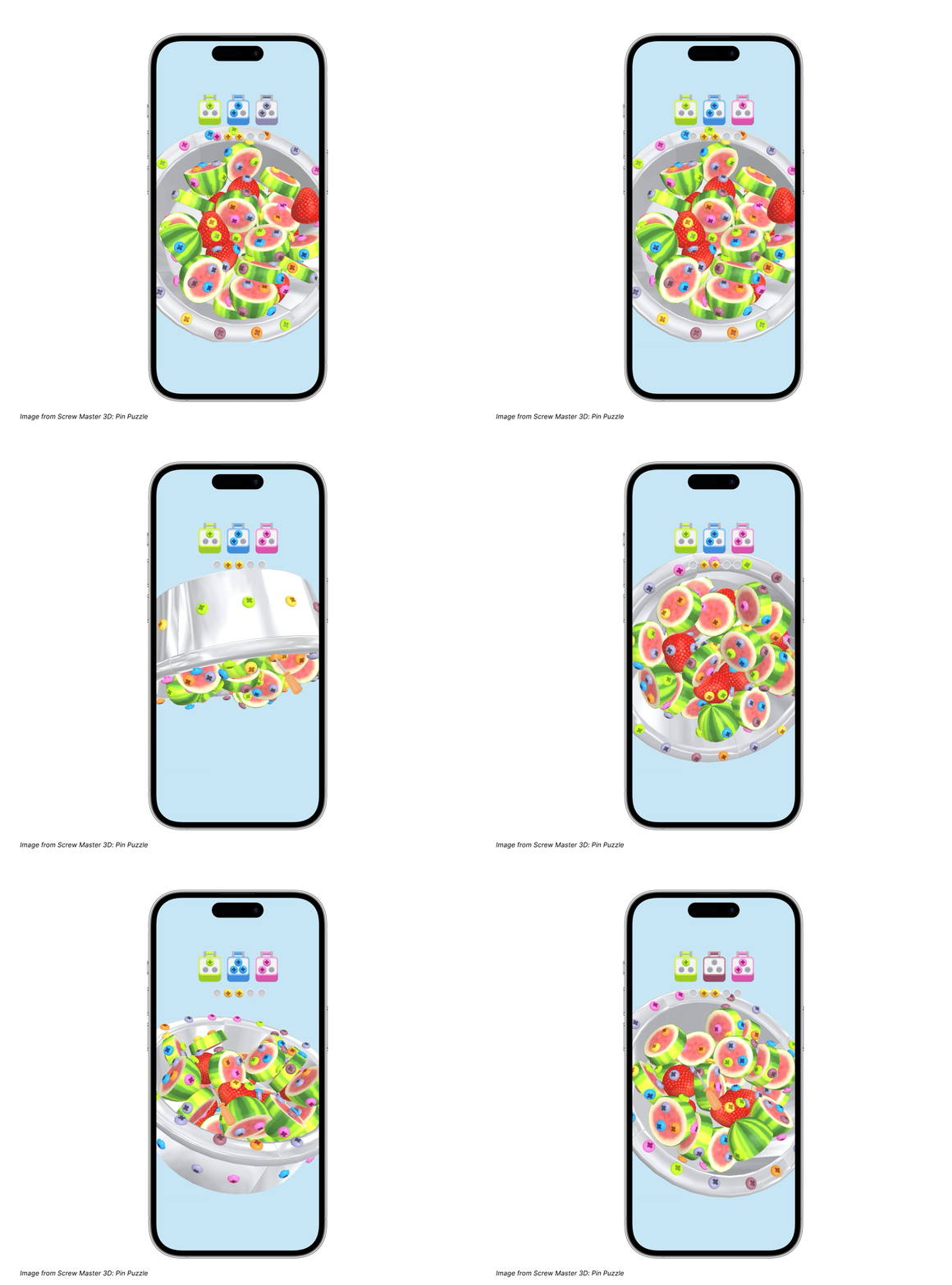
The game doesn’t just rely on matching. It introduces a secondary challenge: you might not always have enough screws to match. In these cases, you can temporarily store screws in a tray slot, but if the tray fills up, it’s game over. This adds a layer of strategy and tension, ensuring players are always engaged.
Why it works:
- Evergreen appeal: The concept of matching is universally understood and has mass appeal.
- Layered complexity: As players progress, the game introduces new mechanics and fluctuating difficulty, keeping the experience fresh.
- Mini-gratifications: Small successes, paired with satisfying visuals and sound effects, create a positive feedback loop.
Pro tip: While match mechanics are popular, don’t blatantly copy existing games. Instead, think about your audience and what will make your game stand out. Conduct extensive market research and amplify the unique aspects of your game.
2. Multiple choice: The power of consequences
Interactive story games with multiple-choice mechanics tap into the human love for storytelling and decision-making. These games give players a sense of control over their destiny, making their choices feel meaningful and impactful.
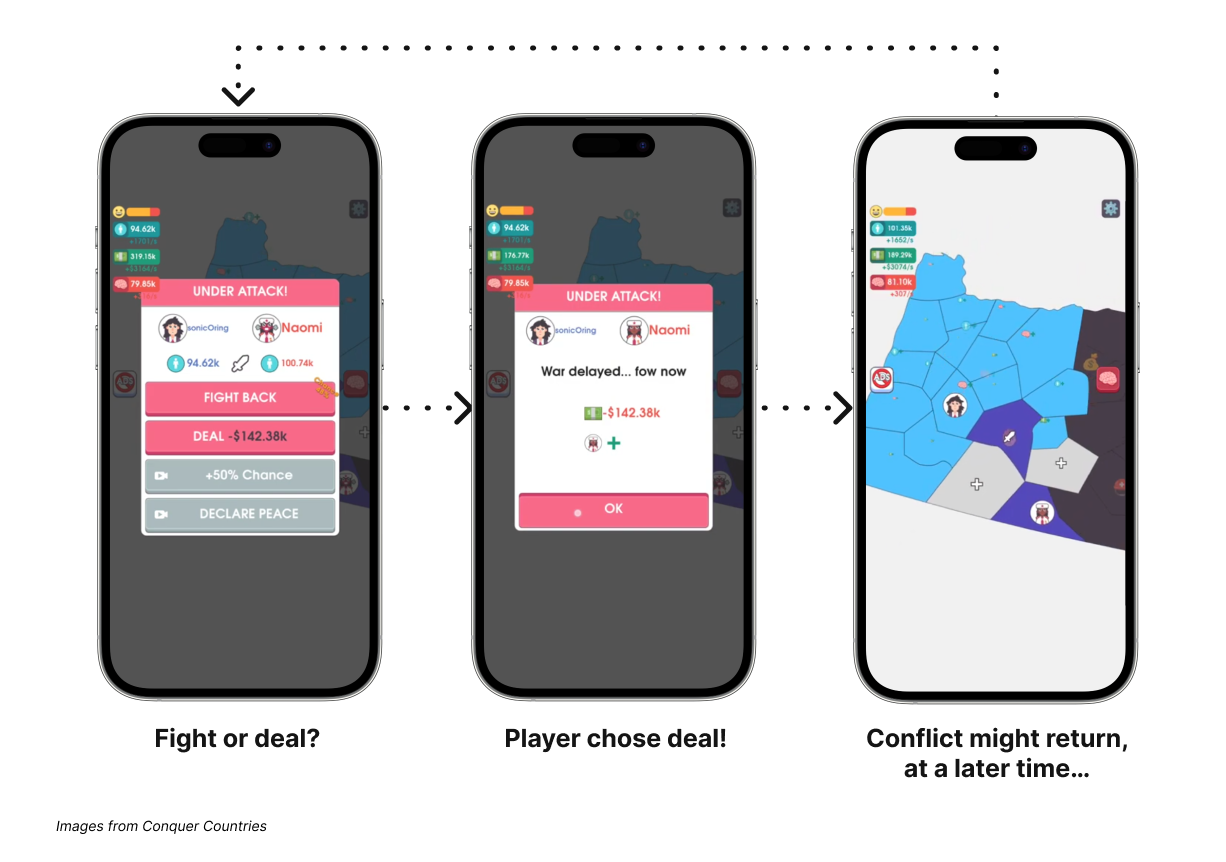
For example, in Conquer Countries, players have the opportunity to make various decisions on economy, international relations, and politics as President of their country. The goal is to keep citizens happy and increase territory. In this game, the interplay between text-based narratives, multiple-choice options, and an interactive map creates a deeply immersive experience.
Players are drawn to the idea that their decisions have real consequences. For instance, failing in one playthrough might unlock new strategies or paths in the next. This appeals to the “grand strategist” mindset and keeps players motivated to explore different outcomes.
Why it works:
- Creative freedom: Players feel empowered to shape their own story.
- Replayability: The branching paths encourage multiple playthroughs to explore all possible outcomes.
- Emotional investment: Meaningful choices create a deeper connection to the game world and characters.
Common mistakes to avoid:
- Meaningless choices: Nothing frustrates players more than realizing their choices don’t actually matter. So ensure that every decision has visible and impactful consequences.
- Not using AI strategically: AI is a strong tool for generating questions and answers, but the system must be built in a way that enables developers to maintain control over the branching of the game and its economy. Otherwise, future changes may become hard or impossible to implement.
Pro tip: Focus on meaningful branching. Players need to feel that their decisions are shaping the world around them. Test and iterate to find the right balance of flexibility and control, ensuring that every choice feels significant.
3. Resource management: Balancing strategy and economy
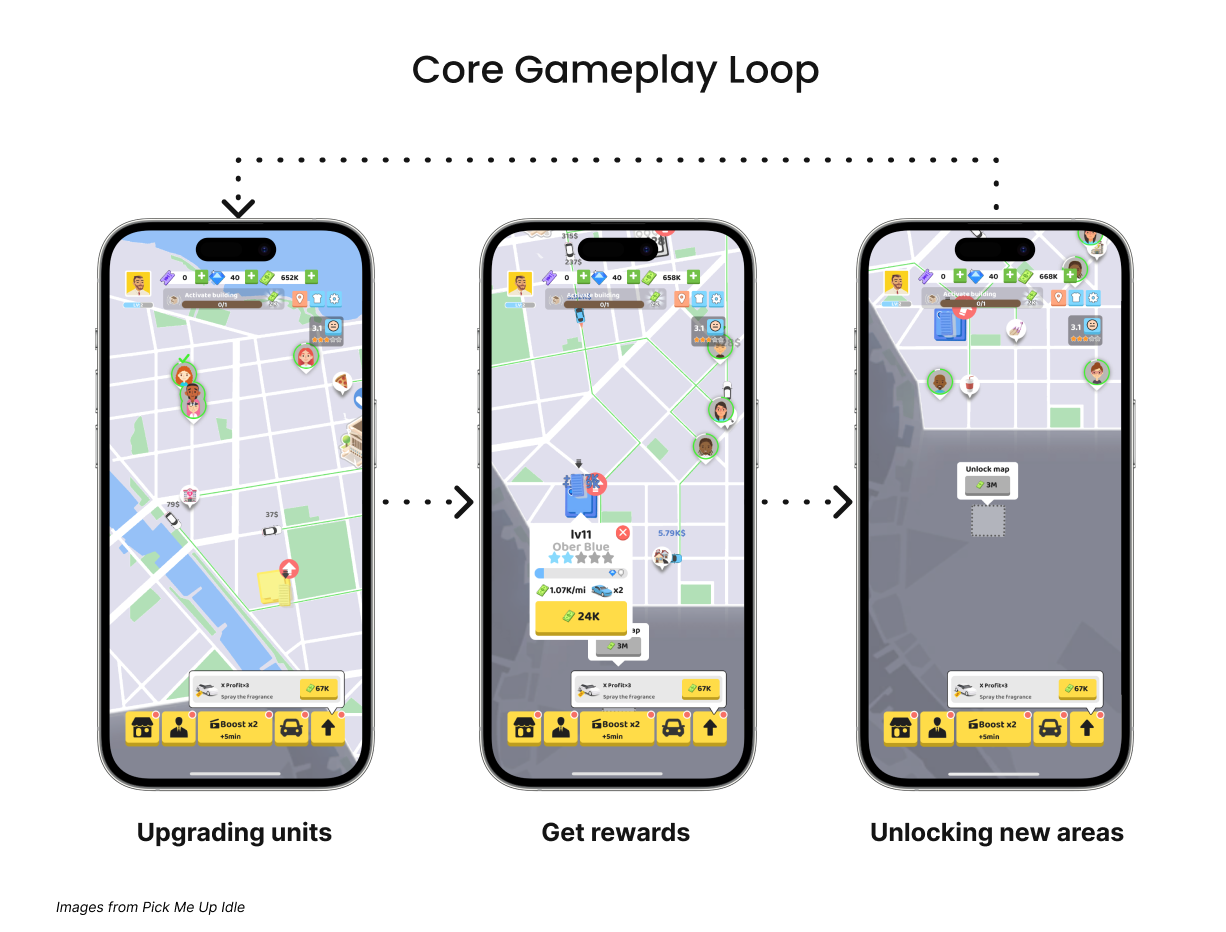
Resource management games mimic real-life economic decisions, challenging players to strategize how to allocate limited resources. Whether it’s upgrading units, managing supplies, or investing in new technologies, these games offer a satisfying blend of planning and execution.
For example, Pick Me Up Idle offers players the opportunity to run their very own taxi cab business, and expand across multiple locations by making strategic business decisions and effectively allocating resources.
Why it works:
- Real-life parallels: Players enjoy the challenge of making tough decisions with limited resources.
- Strategic depth: The need to prioritize upgrades and investments keeps players engaged.
- Satisfying progression: Watching your economy grow and your strategy pay off is incredibly rewarding.
The key to a successful resource management game is balance. An unbalanced economy—either too permissive or too restrictive—can break the flow of gameplay. For example, if players are flooded with resources early on, the game loses its challenge. On the other hand, if resources are too scarce, players may become frustrated and disengaged.
Pro tip: Use flow theory as a guiding principle. The game should challenge players just enough to be fully immersed and enjoying themselves. Measure the amount of time-played to understand how long your players are in ‘flow state’ and use this information to create a seamless progression curve that’s both challenging and rewarding.
Craft games that engage players
Creating a successful hybrid game requires extensive research, testing, and iteration. By using these hybrid game mechanics thoughtfully and keeping the player experience at the forefront, studios can craft games that wow players and keep them engaged.
So, whether you’re designing the next Screw Master or a branching narrative epic, remember: it’s all about balance, creativity, and giving players that irresistible sense of gratification.
Let's put these tips to good use
Publish your game with Supersonic