
TL;DR
- Connect a creative core loop (like decorating) with a progression loop using shared currencies.
- Make onboarding and UX simple so players quickly understand goals and systems.
- Show clear, visual progression with quick wins and long-term goals.
- Build daily habits with rewards, energy systems, and fair, non-intrusive monetization.
- Use LiveOps and themed events tied to player motivations to sustain engagement and revenue.
Imagine you have the chance to live life in someone else’s shoes – choose a new career, make different lifestyle choices, decorate the home of your dreams. That’s the beauty of simulation games – they give you the entertaining experience of living vicariously through a character you control. It’s therefore no surprise that simulation games are seeing rapid growth in popularity. In fact, online simulation games are projected to grow from $9.24B in 2025 to $17.39B by 2030, representing a 13.5% Compound Annual Growth Rate.
So how can you build your own successful hybrid simulation game that keeps players coming back and spending over time? We’re providing the full blueprint to help you get started.
1. Create a dual-loop system tied to player motivations
At the heart of every successful hybrid simulation game is a system of interconnected loops that work together to keep players engaged. The primary gameplay loop is your core engagement mechanic, the main action that players engage in throughout the game, whether that's making strategic decisions or designing and customizing their space. To work, the core loop must be grounded in your players’ motivations. This is usually creativity, which is driven by personalization, choice, and clear stories players can relate to. For example, in Design Family Life, players can choose everything from their character's career and partners to room styles and outfits, with interior design as the core mechanic. This allows them to select furniture, paint and wallpaper, furniture placement, and other home decor items.
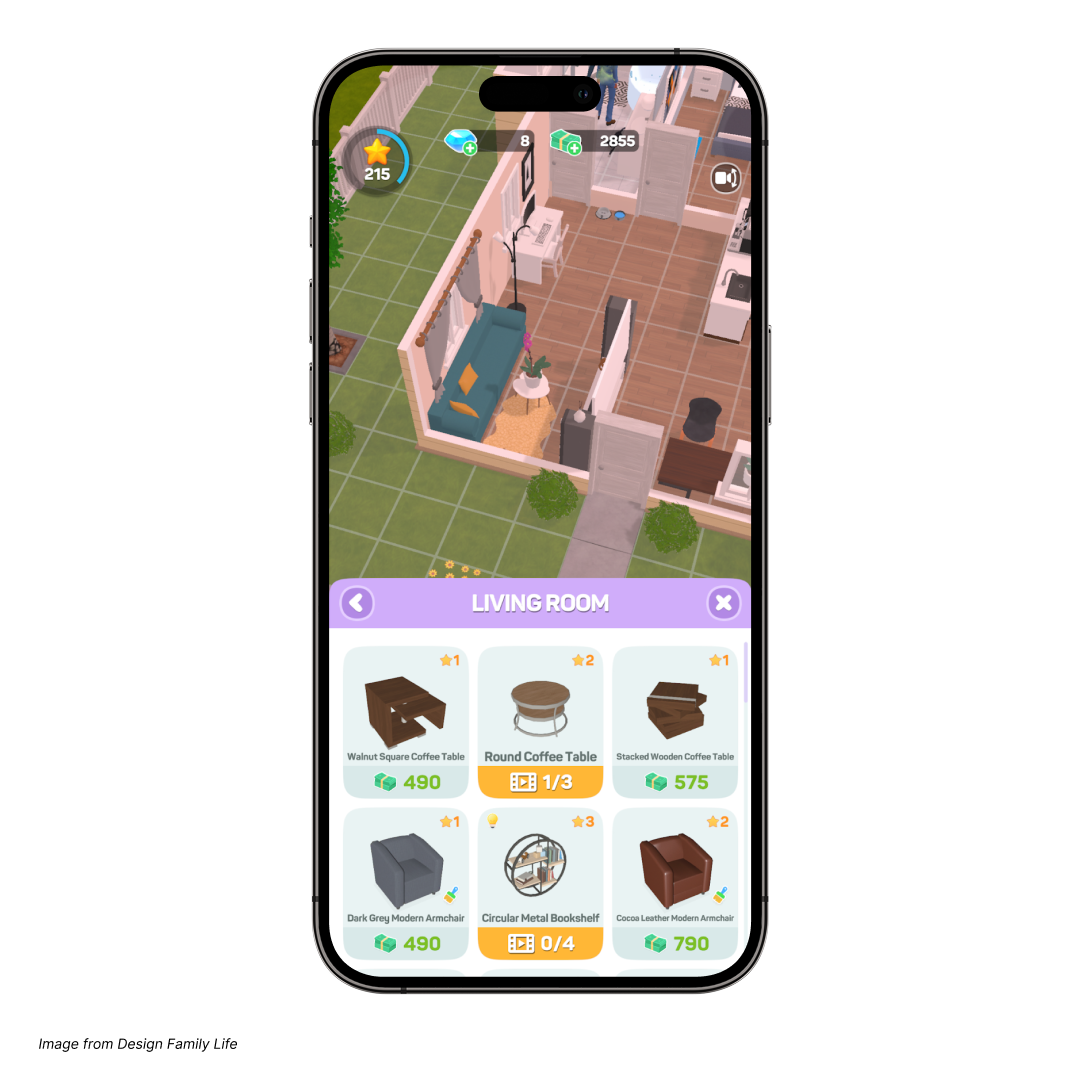
This primary gameplay loop is paired with the simulation/progression loop, which acts as your retention hook by giving players something to build, grow, or nurture over many play sessions. You need to achieve the right balance between both loops, ensuring neither overshadows the other. Tying everything together is the currency flow between systems, which creates meaningful connections by allowing resources earned in one loop to fuel advancement in the other, establishing a satisfying cycle that keeps players engaged across both loops of your game.
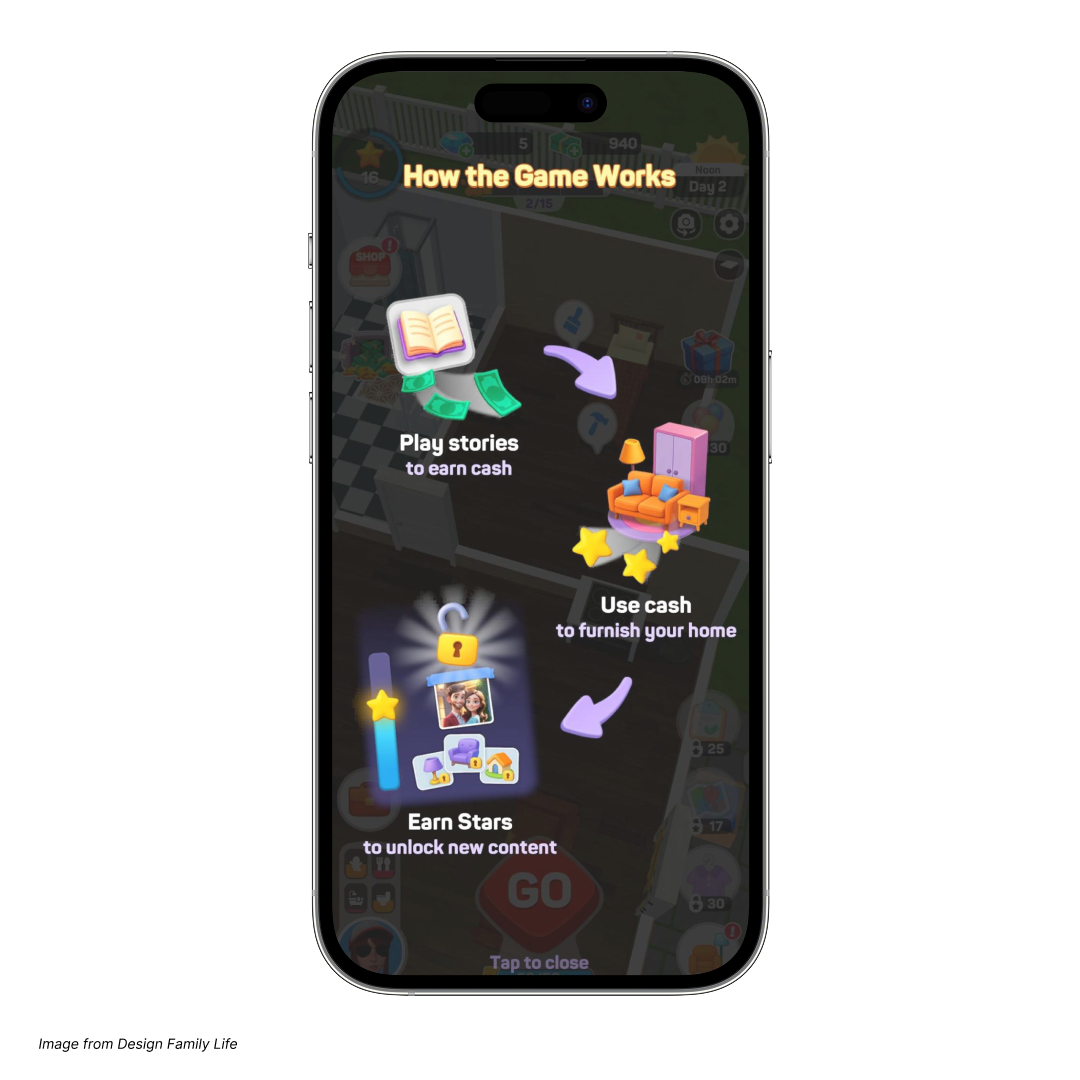
All these elements need to work together cohesively or the game experience will feel fragmented and less satisfying. We saw this in action with the initial design of Design Family Life. While decorating the player character's home was always a focus, there was a disconnect between this mechanic and completing stories. New decoration content didn't feel integrated with progression; it felt like a separate and secondary feature, even though decorating was the main motivation for players. The solution was to create a new loop where story completion (spend energy to earn cash) leads to acquiring new furniture (spend cash to earn stars), which in turn unlocks new story moments (acquire stars to unlock new opportunities to spend energy). This meant that all the features of the game were interconnected and felt meaningful.
2. Make sure onboarding and UX are clear and straightforward
The first session experience can make or break a hybrid simulation game, so it’s essential to articulate first session goals and provide a carefully paced tutorial that introduces your dual mechanics without overwhelming new players in those first few minutes. Tutorial pacing for dual mechanics is especially crucial since you need to teach players two interconnected systems without confusing or overwhelming them. In Design Family Life, we clarified the connection between story progression and decorating, resulting in significantly improved player retention and engagement.
In addition to tutorials, you need to make sure your UX is clear, intuitive, and welcoming. Players should understand what the goal is within the first few seconds, with all buttons and the full screen clearly visible through a simple, uncluttered layout that guides their attention to the next action. Avoid requiring players to make too many decisions too soon, as this can be overwhelming and push them away early. Your UI must be organized to avoid confusion. Additionally, progression systems need to be immediately accessible and easy to understand, allowing players to quickly grasp how their actions lead to clear advancement. The visual style should also match hybrid simulation expectations, using familiar design patterns that signal the type of experience players can expect.
3. Design meaningful progression systems
Player retention in hybrid simulation games depends on creating progression systems that feel meaningful and rewarding, balancing short-term wins with long-term goals to keep players motivated at every stage of their journey. Immediate victories, like completing a quick task or earning a small reward, provide short bursts of satisfaction that sustain engagement, while ambitious long-term objectives give players aspirational targets worth working toward over weeks or months.
This progression should include visible transformation through visual rewards that allow players to see tangible evidence of their advancement, whether that's an upgraded building, a transformed landscape, or new customization options that showcase their progress over time. Layered on top of this are unlocks and discovery mechanics that introduce new features, areas, or possibilities as players progress, creating a sense of anticipation and rewarding curiosity with fresh content that expands their gameplay experience.
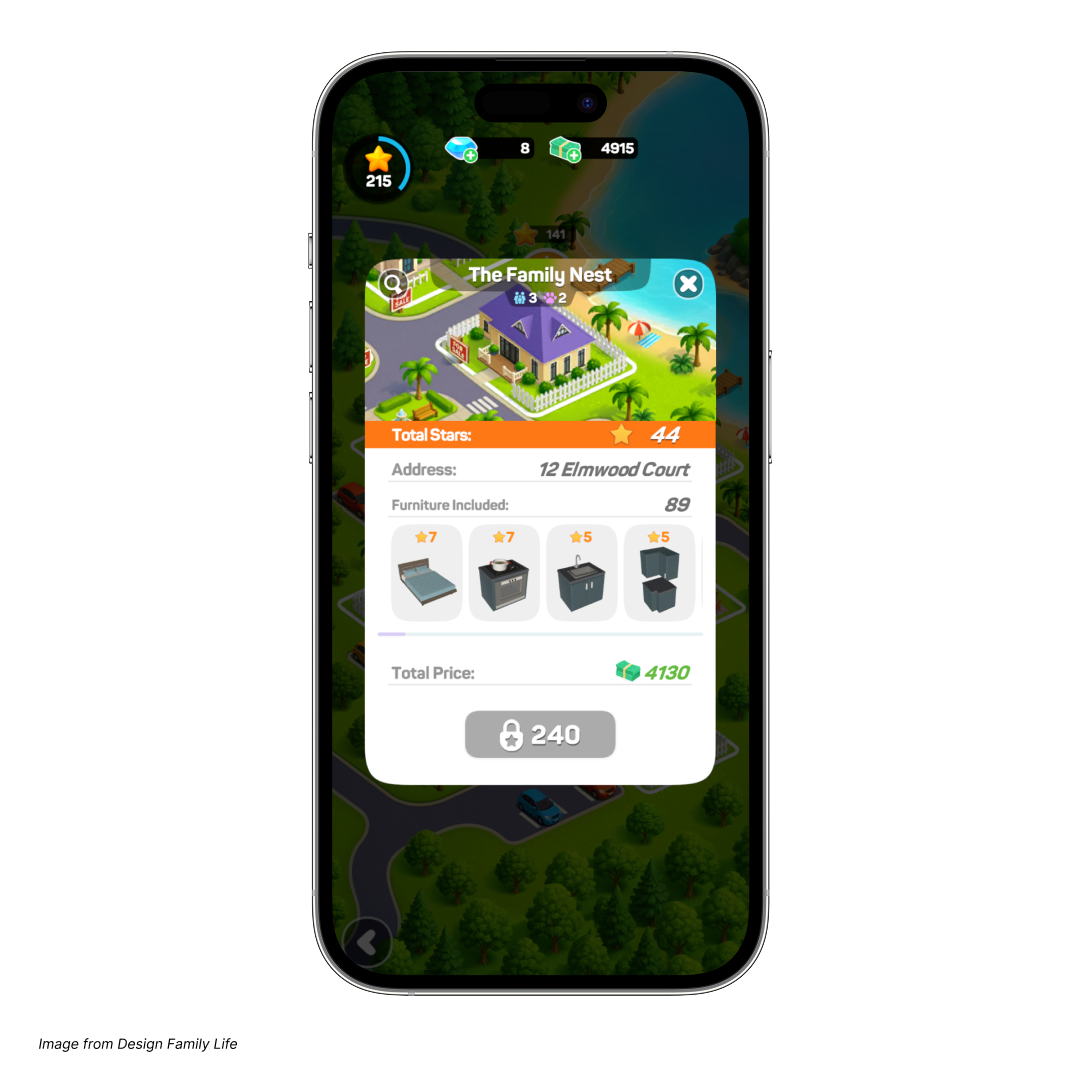
For example, in Design Family Life, players are able to unlock more stylish furniture, advanced appliances, and clothing options as they progress and earn additional stars. This keeps them steadily motivated to engage with the core gameplay. Over time, they can earn enough stars to buy a nicer house, an ambitious long-term goal that gives them an extra boost of motivation.
Finally, players need to feel a steady sense of growth without hitting frustrating plateaus or overwhelming spikes in difficulty. When these elements work together, they create a progression system that feels rewarding, meaningful, and worth the player's continued investment.
4. Integrate daily habits and routines
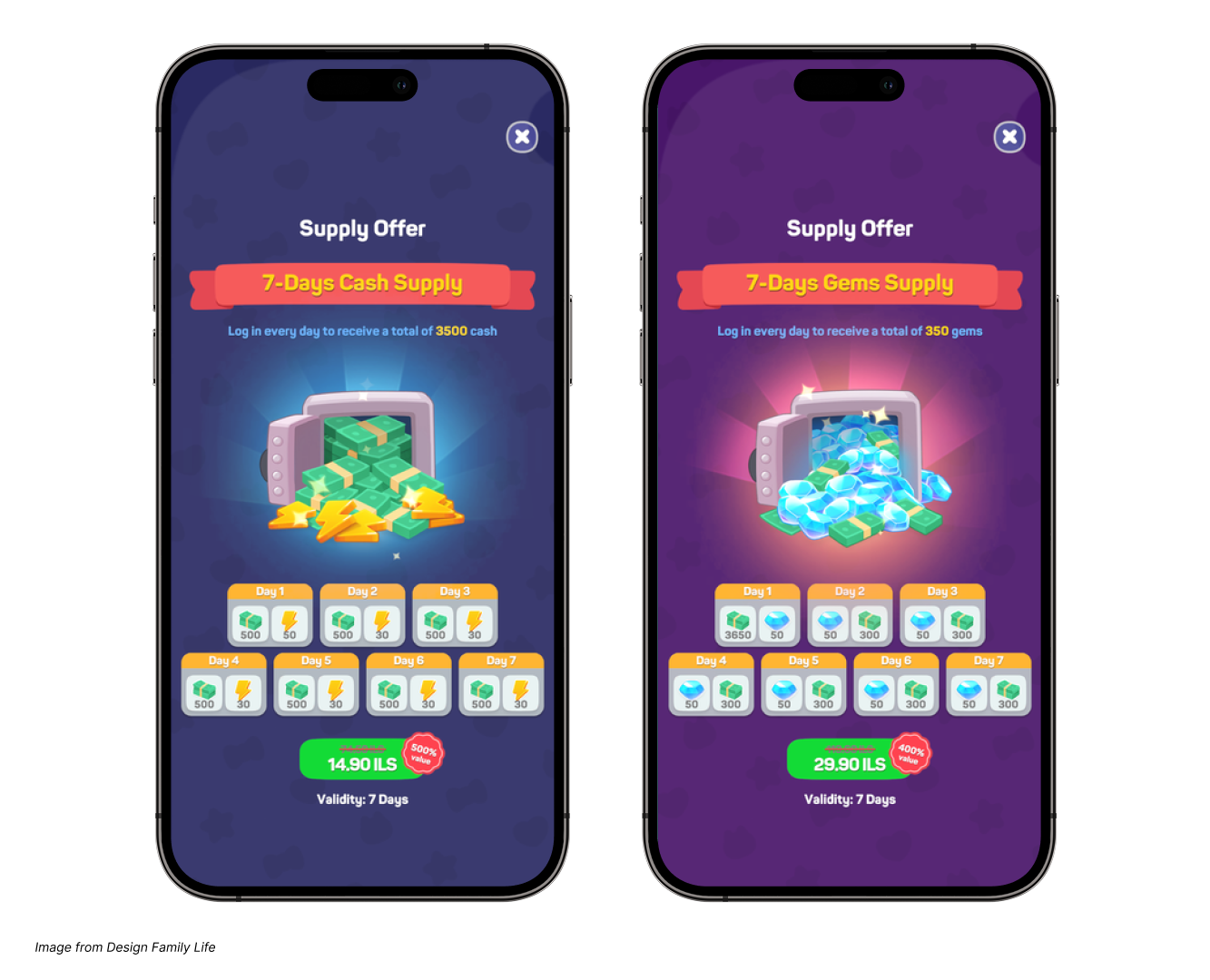
Creating daily habits is essential for turning casual players into dedicated long-term fans of your hybrid simulation game. Daily rewards and login bonuses provide immediate incentives for players to return each day, with increasingly satisfying rewards that encourage players to maintain their daily streak. These systems tap into habit formation psychology, transforming your game from something players check occasionally into a regular part of their daily routine.
Complementing this are energy or stamina systems that pace gameplay sessions, preventing burnout while creating predictable return windows that fit into players' schedules. When players know their energy will regenerate in a few hours, it gives them a reason to come back multiple times per day without feeling pressured to play for extended periods in one go. The key is balancing these systems so they feel rewarding rather than restrictive. Players should feel excited about their daily bonus and motivated by the rhythm of energy regeneration, not frustrated by artificial barriers. When designed thoughtfully, daily habits and routines create a sustainable engagement loop that respects players' time while building consistent play patterns that drive long-term retention and monetization.
5. Monetize without breaking immersion
Effective monetization in hybrid simulation games requires a balance between generating revenue and maintaining player trust and engagement, so both your players and your business win. Start by defining clear hard and soft currencies, where hard currency (premium) creates scarcity and value while soft currency (earnable) keeps the game accessible and rewarding for most players.
Simulation games should use multiple currency types to promote different aspects of the core loop and meta layers, but if these currencies are unbalanced or fail to work cohesively together, they can confuse players or make each one feel less valuable and harder to understand. For example, initially, Design Family Life had energy for actions, stars for story progression, cash for furniture, and coupons to skip rewarded videos. Eventually, our team realized that the coupons prevented players from purchasing gems, which would also enable them to skip rewarded videos or progress faster through the game. After removing the coupons, conversions jumped, with a nearly 3x increase in revenue from late-game purchases and a 40% uplift in ARPU on day 60 (D60), a simple change that made the game clearer for players and healthier for the business.
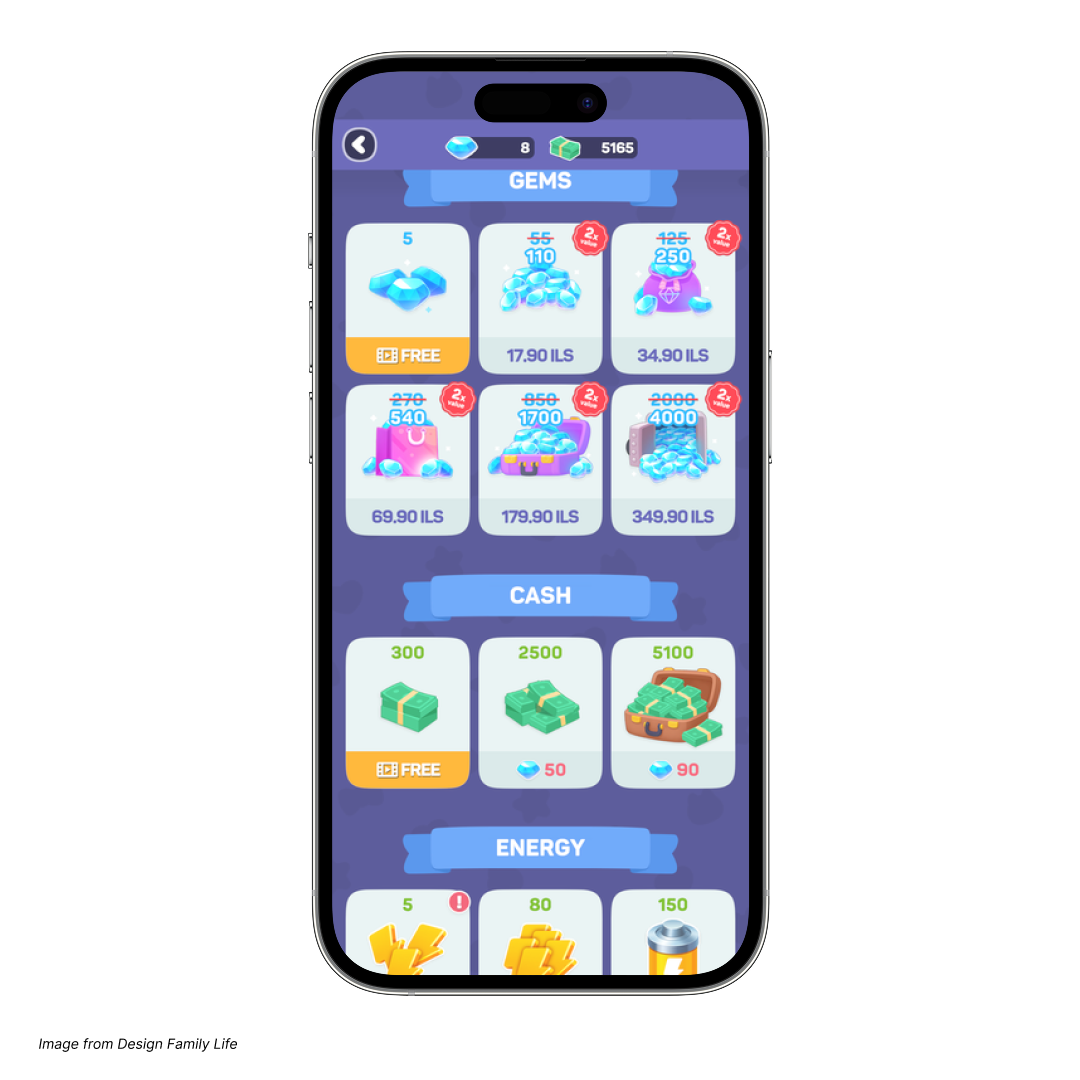
Beyond currency design, offer placement and timing are equally critical; presenting the right offer after a big win or at a natural bottleneck can dramatically improve conversion rates without feeling pushy. Use consumables to drive repeat purchases and permanent upgrades to deliver long-term value at higher price points. For ad integration, follow rewarded video best practices with meaningful rewards and place ads at natural breakpoints or as optional boosts, so they feel helpful, not intrusive. Balancing ads with IAP gives players multiple paths to progress without making either feel mandatory.
6. Keep players engaged with LiveOps
LiveOps and limited-time offers are powerful tools for maintaining long-term engagement and creating ongoing monetization opportunities in hybrid simulation games. Having consistent events enables players to anticipate and plan for special content, building routine engagement while keeping the experience fresh. In addition, seasonal events like holidays provide natural touchpoints for themed content that feels relevant and fun.
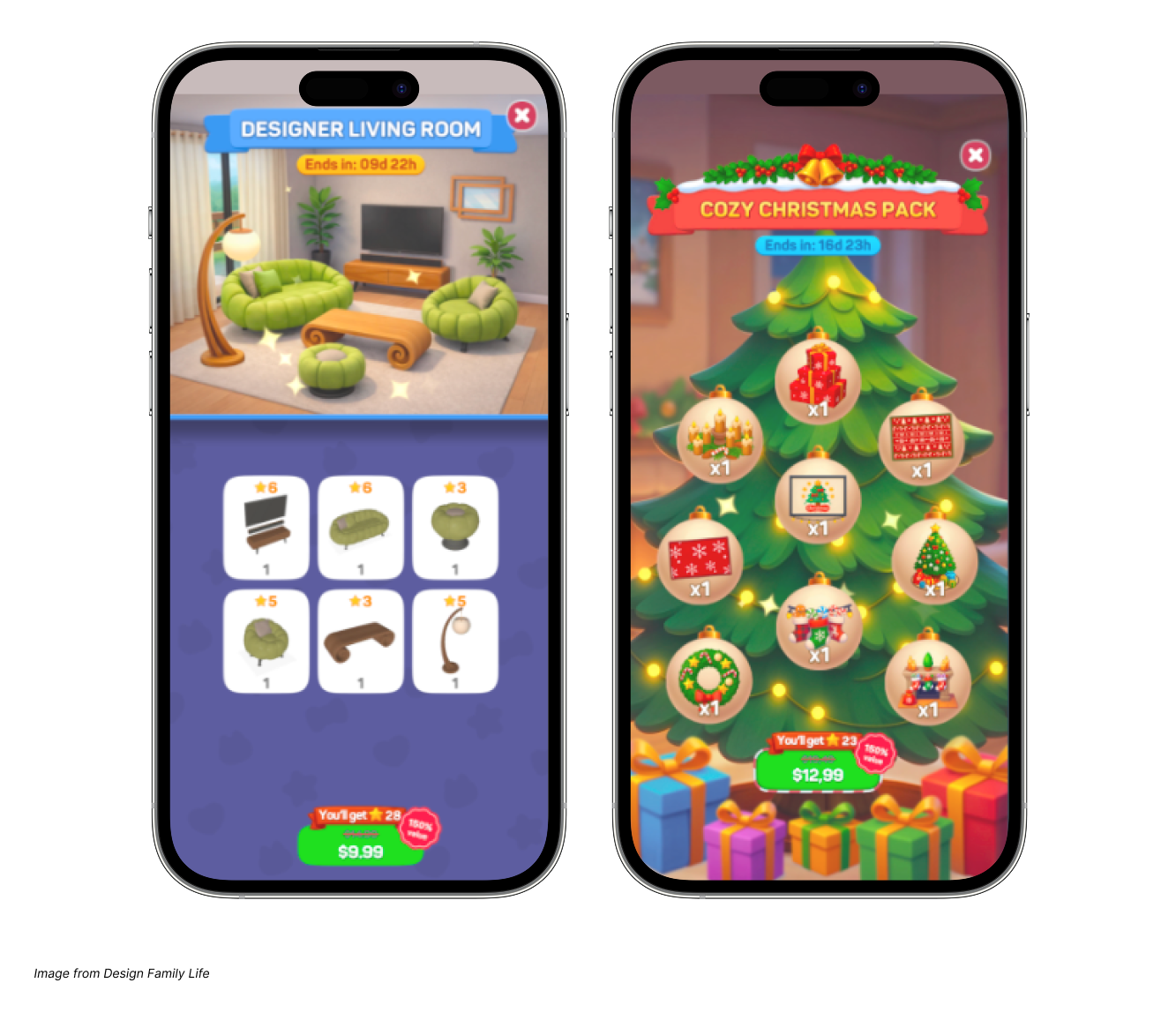
The key to success is providing LiveOps offers that appeal to specific player motivations rather than generic promotions. For example, in Design Family Life, behavioral data made it clear that the player’s prime motivation is creativity, which ties directly to the core mechanic of home decorating. They could see this because rewarded video placements players engaged with most were tied directly to furniture packs and decor themes. The team leaned into this insight by adding furniture packs as in-app purchase options, allowing players to purchase thematic and seasonal packs like Christmas-themed home decor sets, as well as bundles related to events and story moments they care about. The result of these changes was significant, leading to a 15% increase in day 7/day 14 (D7/D14) ROAS and a 50/50 IAP-IAA split, with late-game players driving most of the revenue.
Create a hybrid simulation game players love
Building a successful hybrid simulation game comes down to mastering these core pillars and understanding how they work together to drive engagement, retention, and revenue. Ground your design in what simulation players actually want: creative expression through meaningful choices and personalization. Ensure your dual loops are solid and interconnected, with every mechanic reinforcing the others rather than competing for attention or leaving players confused. Let player motivations guide your monetization and LiveOps strategy so every offer and event feels relevant, fair, and player-first.
Want to build a hybrid simulation game that players can't put down? Supersonic helps developers optimize every aspect of their game, from core mechanics to meta progression and monetization. Submit your game to see how Supersonic can partner with you to create a hybrid simulation experience that drives engagement, retention, and revenue.
Let's put these tips to good use
Publish your game with Supersonic