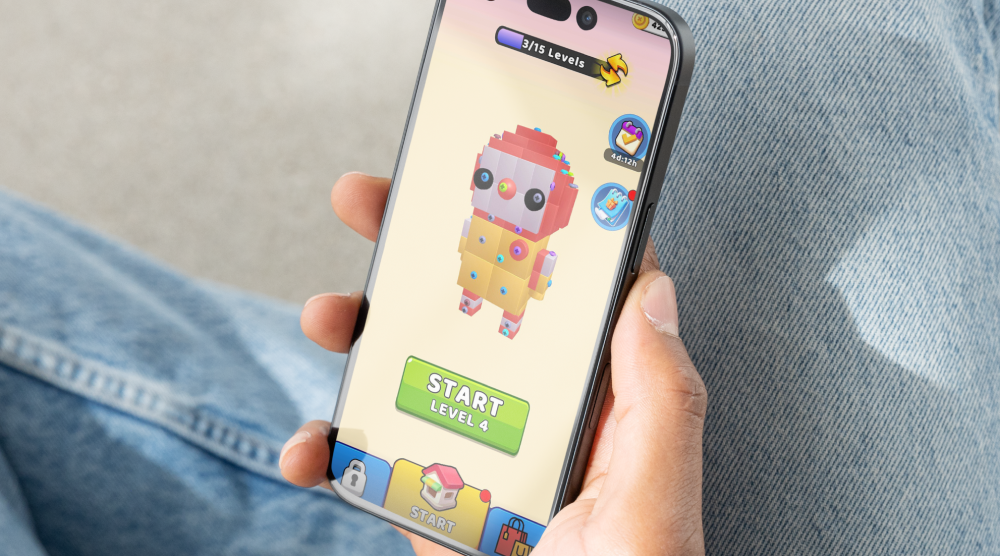
EOGAMES Studio’s titles with Supersonic have been established as leaders in the hybrid-casual puzzle genre with their engaging approach to user experience (UX) and game design. Unravel Master and Screw Master 3D are great examples of how thoughtful UX design can create addictive, satisfying gameplay that keeps players engaged while also driving monetization.
We’re copying our own homework to help you make your games’ UX more immersive and drive profitability. Let’s examine the UX strategies that have made these games successful.
The foundation: It’s all about the gameplay
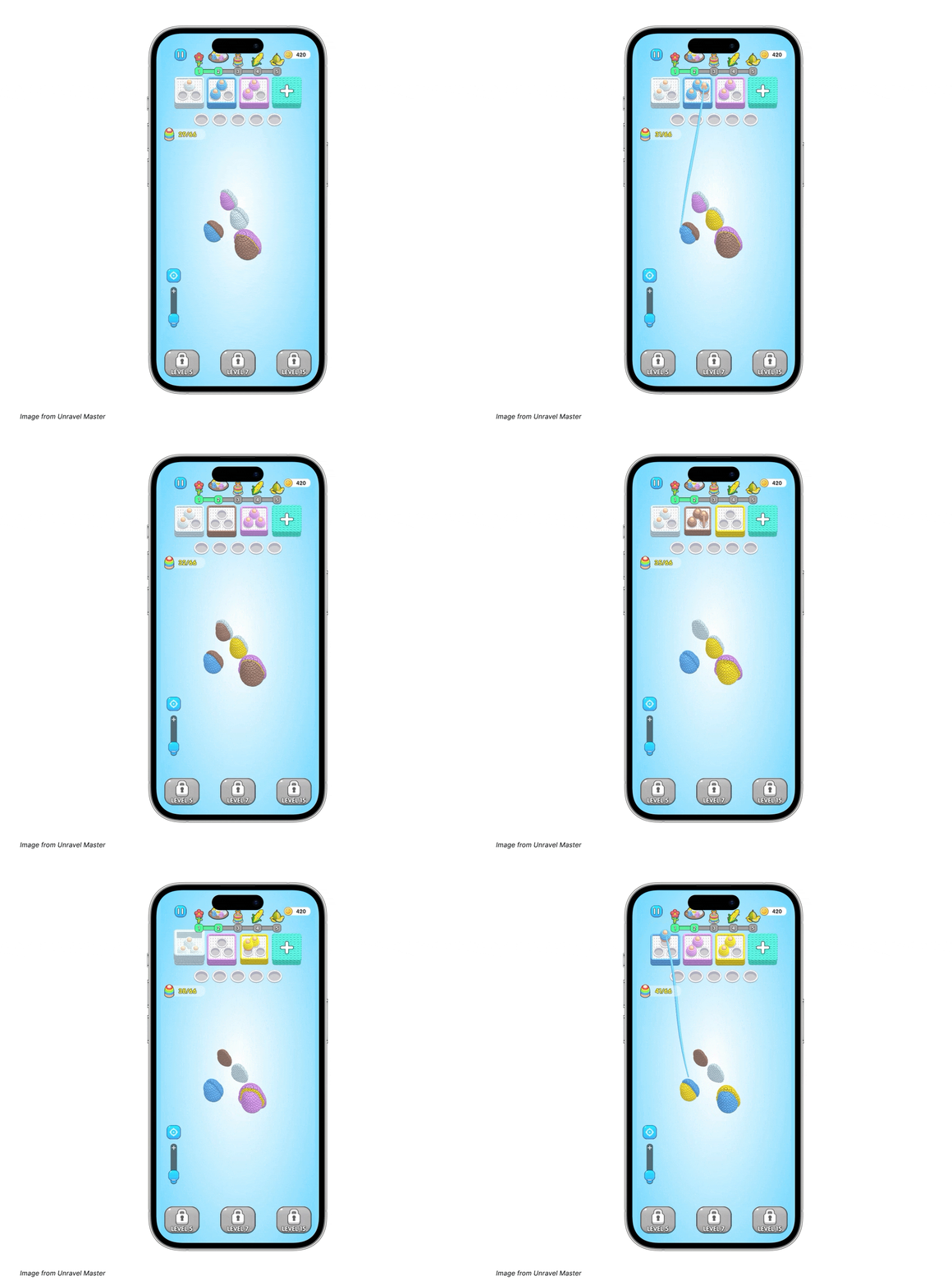
Our and EOGAMES approach to UX is built on a fundamental understanding that the core gameplay loop is what keeps players hooked. Both Unravel Master and Screw Master 3D feature simple loops that are easy to understand but still challenging to master. Breaking them down into their main parts, we can see how the simplified core gameplay loops in both games revolve around similar mechanics:
Unravel Master's Loop:
- Collect yarn strategically
- Complete craft boxes
- Get rewards and progress to next object
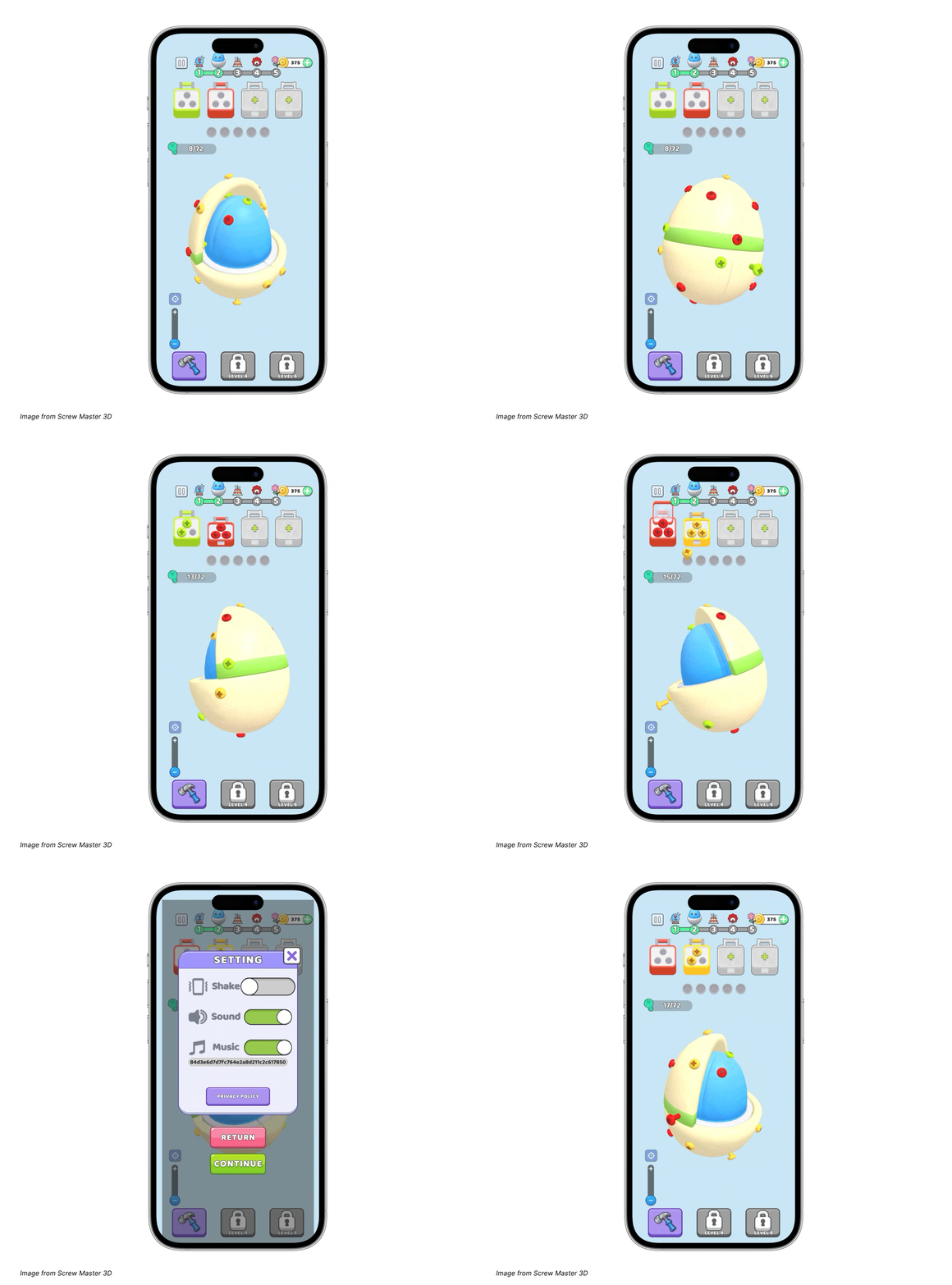
Screw Master 3D's Loop:
- Collect screws in correct order
- Complete toolboxes
- Get rewards and progress to next object
At their most basic level, both gameplay loops center on strategic decision-making and collection. This evolved from a design philosophy that focuses on two impactful strategies: loss aversion and the ‘just one more level’ effect.
This is achieved through carefully calibrated difficulty curves (which you can read more about here) and supported by the user interface (UI).
The silent hero of EOGAMES’ UI: Visual clarity
The first priority when designing the UX of these games was to keep the focus on their hooky gameplay - which meant ensuring that Unravel Master and Screw Master 3D are as easy to use as possible.
To do that, EOGAMES and the Supersonic team followed strict visual design principles that stress clarity above all else. That means clean backgrounds that don't compete with gameplay elements, as well as using a minimalist color index range that prevents visual overwhelm.
The games’ consistent aesthetic language also helps to create visual clarity related to gameplay and the emotional hooks of the games. For example, Unravel Master uses soft yarn textures, vibrant colors, and curved corners to create a vibe of warmth and creativity. Screw Master 3D uses hard textures, metallic shine, and sharp edges to convey the importance of precision in decision-making.
The visual design extends to elements that users interact with, with buttons maintaining color palette consistency and with the toolbox/craft box UIs matching the games’ core themes. This helps to create a cohesive experience that reinforces the game's emotional identity.
Another way EOGAMES applied visual clarity in Screw Master 3D’s gameplay is by using strategic transparency in the game’s levels. Players interact with transparent assets so they can see the underlying layers, enabling strategic decision-making and puzzle-solving.
Creating satisfying interactions
Haptic feedback, like vibrations, are another tool these games use to keep players engaged and immersed - in other words, it’s also the feeling of playing these games that reinforces the gameplay. Both games excel at creating satisfying responses to player inputs.
In the same way the color palettes and mechanics of these games support the central hooks, so does the feedback. Screw Master 3D does this by using immediate physics-based responses to player actions, like sharp, mechanical "unscrew" sounds that provide audio satisfaction and with visual progress through realistic screw movements. Unravel Master pairs its gentle untangling mechanics with smooth animations and rhythmic, meditative interactions that help to enable flow states and cozy concentration.
Both games share how every interactive element provides clear feedback. Some other examples include how interactions have animations for button presses, as well as quick visual confirmations and hint indicator animations that guide the user to convert with boosters.
Influencing player psychology through the UI
One of Unravel Master’s most innovative UX decisions involves leveraging loss aversion psychology through Win Streak mechanics - players receive bonuses based on how long they’ve gone without losing.
This creates a powerful psychological driver where players are motivated not just by potential gains, but by avoiding losses, making each level feel more consequential. One of the ways Unravel Master and Screw Master 3D’s UI reinforces this is with its lobby/homescreen.
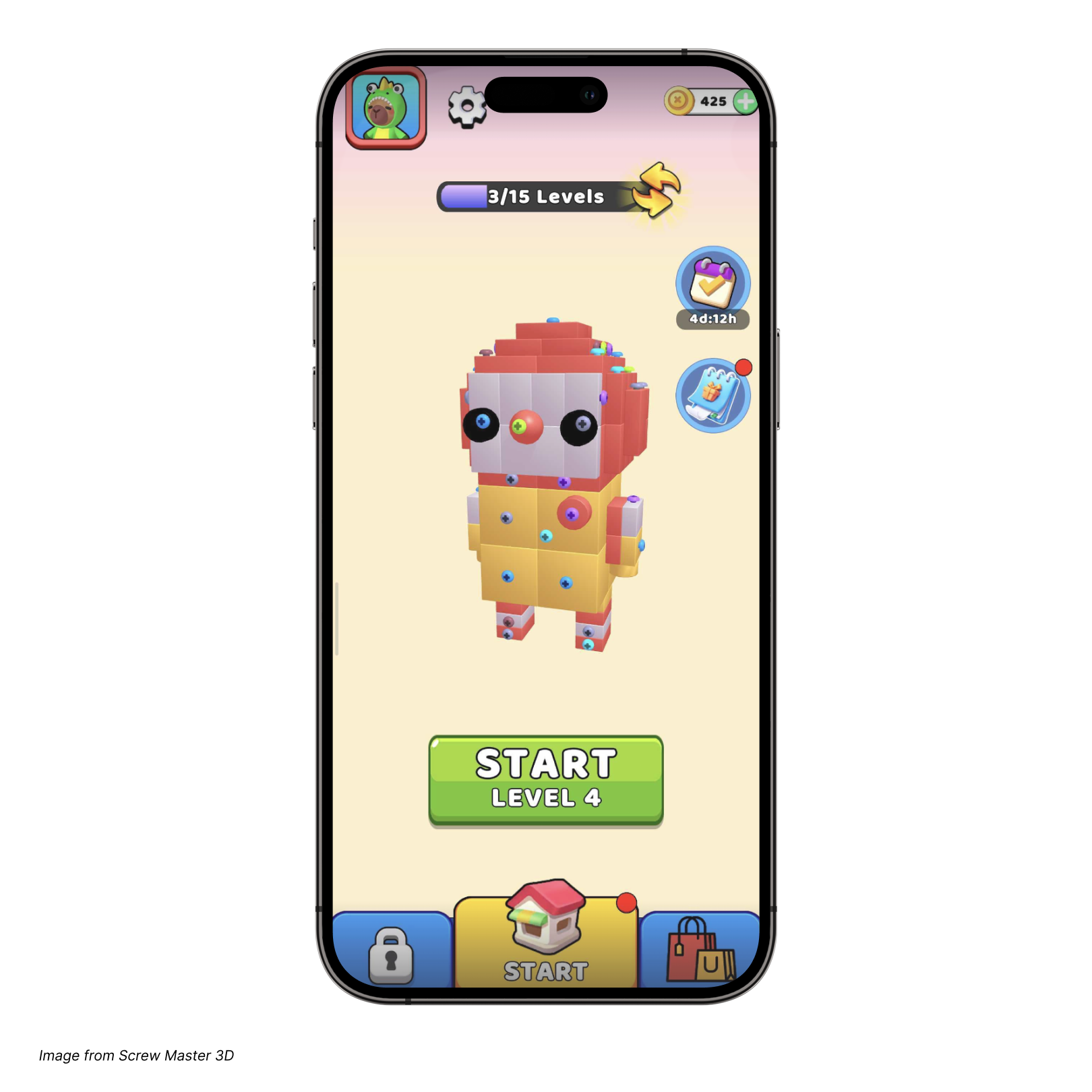
When players pause or exit the game, the first screen they see when resuming is where they left off in a level. This works to keep players in the action and up to date with their progress - and keeping the focus on the gameplay.
Unravel Master and Screw Master 3D both leverage loss aversion through the UX is in their fail states. Fail states are always clear and visible through tray slots indicating available moves and blinking effects that warn players when only one slot remains. This helps to create urgency without frustration.
But the focus isn’t solely on fail states, progress is also highlighted so that the player knows how far they have to go and feels rewarded for completing tasks. Progress indicators, like the objects players are unravelling/unscrewing being visibly deconstructed, show advancement through the levels. Celebrations for partial completions, like the yarn being collected, also work to build immersion which in turn increases the likelihood of players using revive boosters.
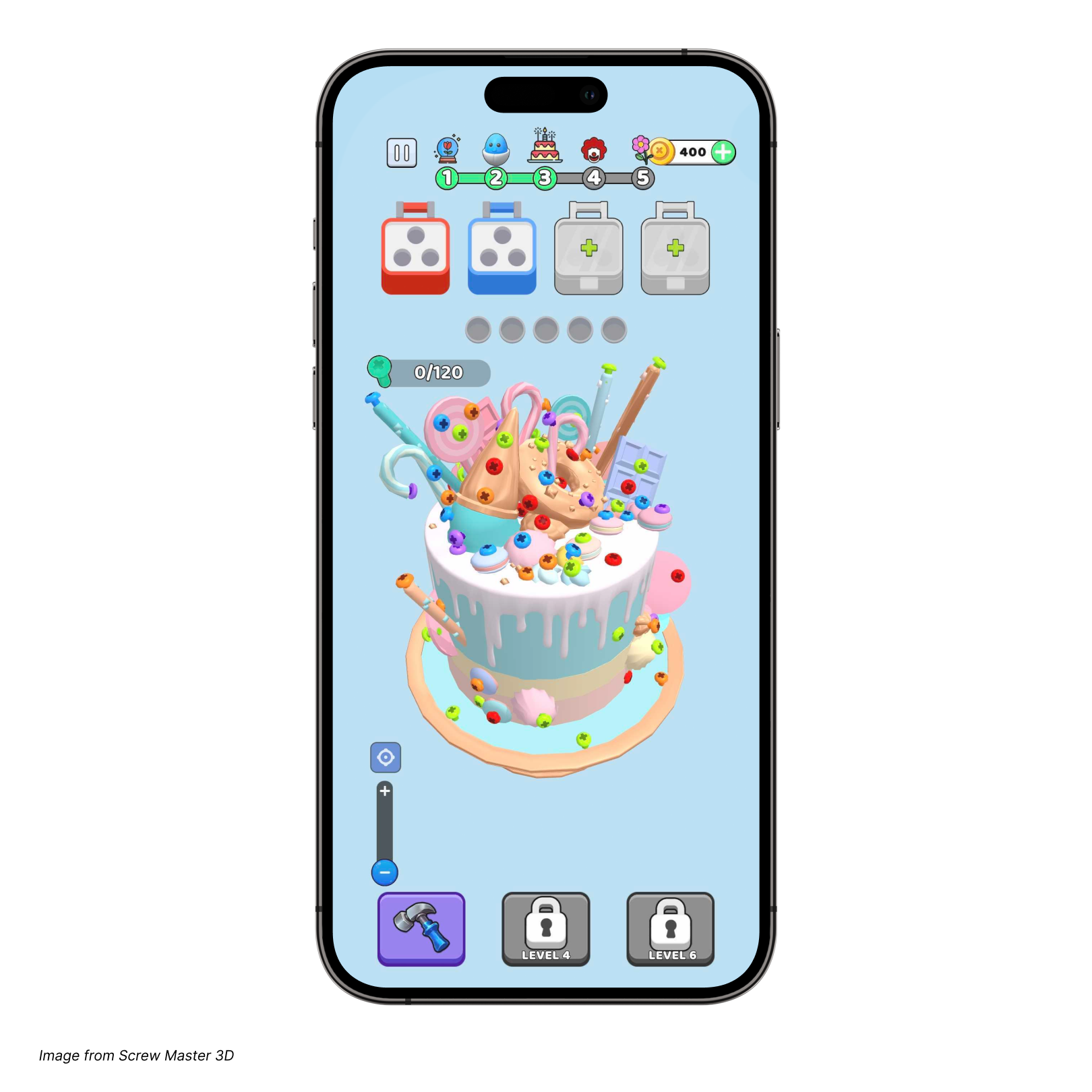
When players do fail levels, they can easily restart the level. Boosters are offered but only contextually. This helps to keep monetization non-obtrusive and keep the player immersed.
Not all games with good UX are great, but all great games have good UX
Creating an awesome user experience isn’t what makes a game great or a success, but it is a core element of what takes it there. The success of Unravel Master and Screw Master 3D show that sophisticated UX design doesn’t only make a game easier to play - it helps to create an environment that players don’t want to leave.
Looking for a deep dive into general UX best practices? Check out this blog.
Let's put these tips to good use
Publish your game with Supersonic