

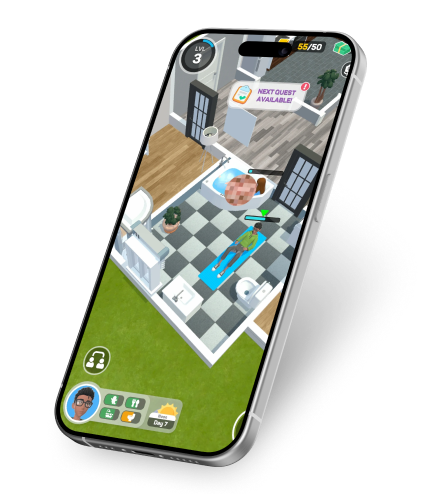
UGI LAB’s Design Family Life began its development as a promising hybrid-casual simulation concept with a strong theme, but its first iteration lacked content depth and struggled with monetization.
While a compelling concept is key, in today’s mature mobile game market it’s simply not enough. Success is predicated on an understanding of what makes a game loved by players while simultaneously being highly monetizable and scalable - and the know-how to put that understanding into action.
Keep reading to learn how UGI LAB collaborated with Supersonic to convert the potential of Design Family Life into real-world success by refining progression, optimizing the economy, and more.
Mapping core mechanics to player motivations
Design Family Life started as an innovation on the life sim genre by the Supersonic team; it combined the drama and life choices of Supersonic’s title Family Life with personalization and interior design. Supersonic just needed the right team of highly talented and motivated developers to collaborate with - enter UGI LAB.
Together with Supersonic, the team from UGI refined the initial concept, forming their own compelling product vision which ultimately formed the core of the game’s concept and structure.
From the outset, the Supersonic team and UGI LAB understood who the target audience of Design Family Life was likely to be - their players were going to be primarily design and sim game lovers (an often female and mature audience). Having this in mind helped to ensure that the core pillars of the game’s design remained focused on what motivated this audience best: personalization, choice, and engaging, relatable narratives.
In just 6 weeks, UGI LAB, working closely with Supersonic, were able to convert their product vision into a playable version of the game for marketability testing - revealing high early retention rates and promisingly long playtimes.
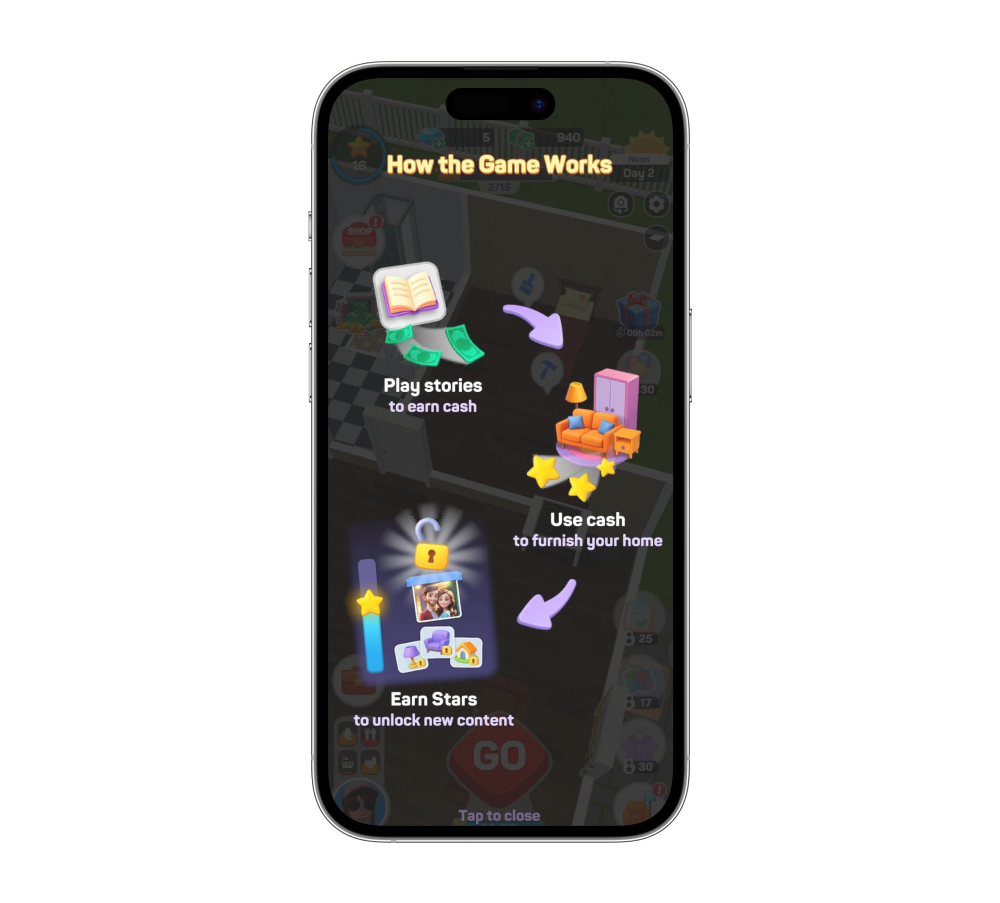
In Design Family Life, players are in control of a customizable avatar that they guide through life stages using a story mechanic. The game revolves around comparatively longer play sessions and has a “Tamagotchi” vibe. The game’s core loop centers on players completing stories to earn cash that is then used to furnish and renovate their character’s home. As the character’s home is furnished, players are rewarded with stars that they can use to level up and unlock new stories.
Throughout the game, customization is used as a primary motivation to keep players engaged: Players can choose everything from their character’s career, partners, room styles, outfits, and more.
Progression engineering: Connecting narrative with unlockables
Design Family Life had a strong concept from the beginning, but realizing its potential meant testing and refinement. The first stop was Design Family Life’s initially fragmented core gameplay loop.
While furnishing and designing the player character’s home was always a focus, there was a disconnect between this mechanic and completing stories. New decoration content didn’t feel integrated with progression, it felt like a separate and secondary feature - even though it was the main motivation for players.
The UGI team worked with Supersonic game designers to create a more cohesive gameplay loop, intrinsically linking story progress to unlocking new content. The new loop they crafted feeds one resource into another continuously: story completion (spend energy to earn cash) leads to acquiring new furniture (spend cash to earn stars) which in turn unlocks new story moments (acquire stars to unlock new opportunities to spend energy). This meant that all the features of the game were interconnected and felt impactful.
Redesigning the UX to exceed player expectations
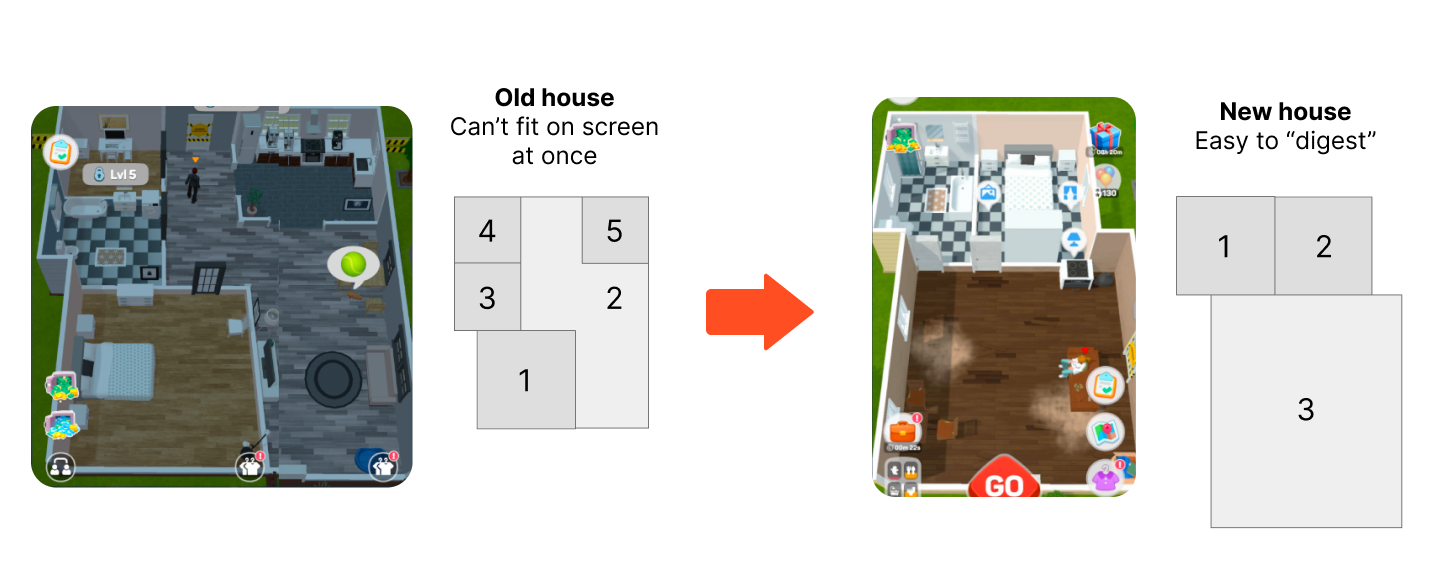
The next step was getting to work on the game’s UX. Joint analysis from Supersonic and the UGI team revealed that many players were overwhelmed by the amount of choices in the early game. Particularly problematic were the number of rooms players could furnish in the first level or ‘home’. The first level was so large, it didn’t easily fit on the screen for most players. This led to confusion, as players didn’t know where to start decorating or what the goal of the level was.
Another issue was the game’s user interface (UI). The UI lacked clarity and no clear organizing principle, making it difficult for players to know what button does what. Moreover, important player actions (like progressing the story, furnishing the home, or completing offers) were not consistently accessible with one tap, requiring players to navigate sub-menus. The visual style also didn’t match contemporary hybrid-casual expectations, leaving some players feeling like the game lacked polish.
To fix these issues required a full UX overhaul by the Supersonic and UGI team. To start, the team simplified the layout of the first level and decreased the size. Now the level could be seen at a glance. The team then designed the layout of the house to make it obvious where players could start and progress from, helping them find their rhythm.
Next, the team got to work on the layout of the UI. They divided the screen into 3 separate zones: the frequent zone at the bottom of the screen, the standardized zone on the sides, and the informative zone at the top.
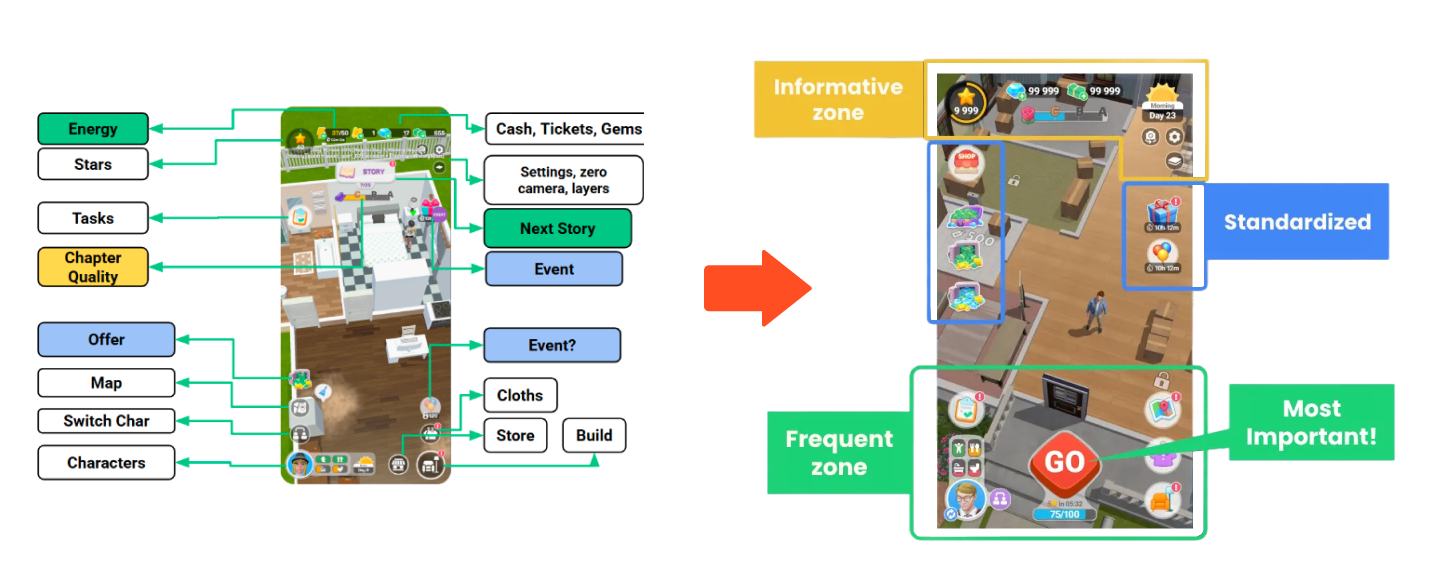
The frequent zone contains the story button, the design mode, special offers, and social features when relevant. The standardized zone is used for offers and shop related actions, like accessing the in-app store or limited-time events. And the informative zone is used for displaying important information, like the number of resources collected and the player’s progress. This made it significantly easier for players to get right into the action, with immediate access to the information they needed.
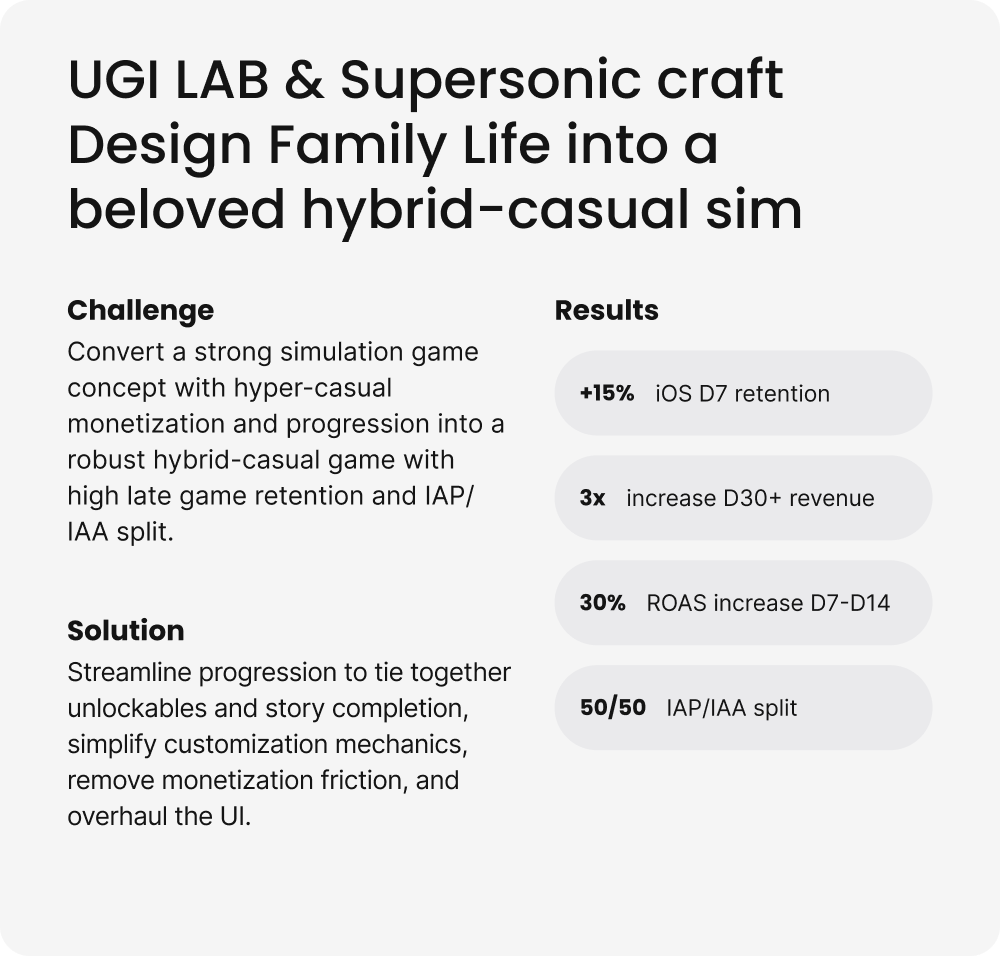
These quality of life and gameplay changes had a great impact on retention, with D7 retention increasing 22%.
Decluttering currency and remedying IAP cannibalization
Once the core gameplay loop and UX had been improved Supersonic game economists joined the team to iterate and refine on the game’s LiveOps, monetization, and economy. Previously, the game used a more traditional timer-based gating. For players this often felt like an external block rather than an integrated system - resulting in players feeling they had less control over the character’s choices.
The game economist's first move was to remove the timer and move to a clean energy-cost system where character actions had energy costs. This energy is replenished by slow passive regen, levelling up, or IAP and rewarded videos (RVs).
Next, the team examined the in-game economy to look for areas of improvement. The initial setup used four distinct currencies each with its own purpose: Energy for actions, stars for story progression, cash for furniture, and coupons to skip RVs.
The team recognized a problem - coupons inevitably delayed monetization and guided users away from monetization touchpoints. Throughout the game, players can watch RVs to either speed up actions or to unlock unique story choices. If players wanted to skip the RVs or progress even faster they could purchase gems.
However, coupons were already filling in the role of gems, and they were provided daily, free of charge. Instead of purchasing gems in the mid-late game, players were saving the coupons they received from the early game to skip buying gems or watching RVs.
The team made a strategic but bold decision. After auditing the IAP funnel, they removed coupons entirely from the shop and core systems and allowed RV skips to be purchased directly with gems. This led to a large increase in gem purchases among late-game users (D30+) and made buying gems feel more natural and fair. The result was a nearly 3x increase in revenue from late-game game purchases and a 40% uplift of ARPU on D60.
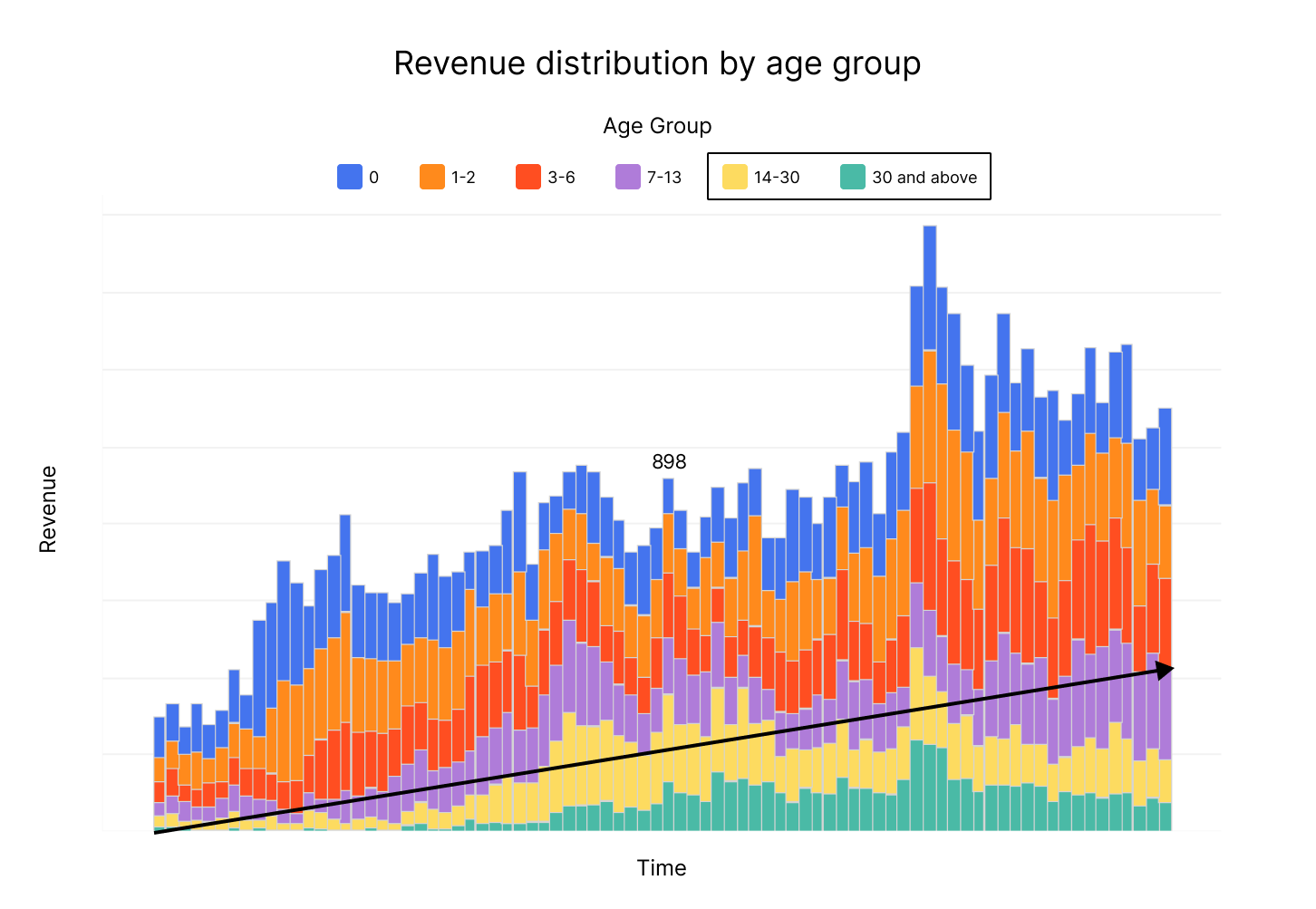
With the in-game economy better balanced, the team turned to creating enticing LiveOps offers to provide more monetization opportunities. Player motivation data and behavior had made it clear that the main driver for players wasn’t progression, it’s furnishing their homes. The RV placements engaged with most were tied directly to furniture packs and decor themes.
The team leaned into this by adding furniture packs as in-app packs. Players could purchase thematic and seasonal packs, like Christmas-themed home decor sets, as well as bundles related to events and story moments.
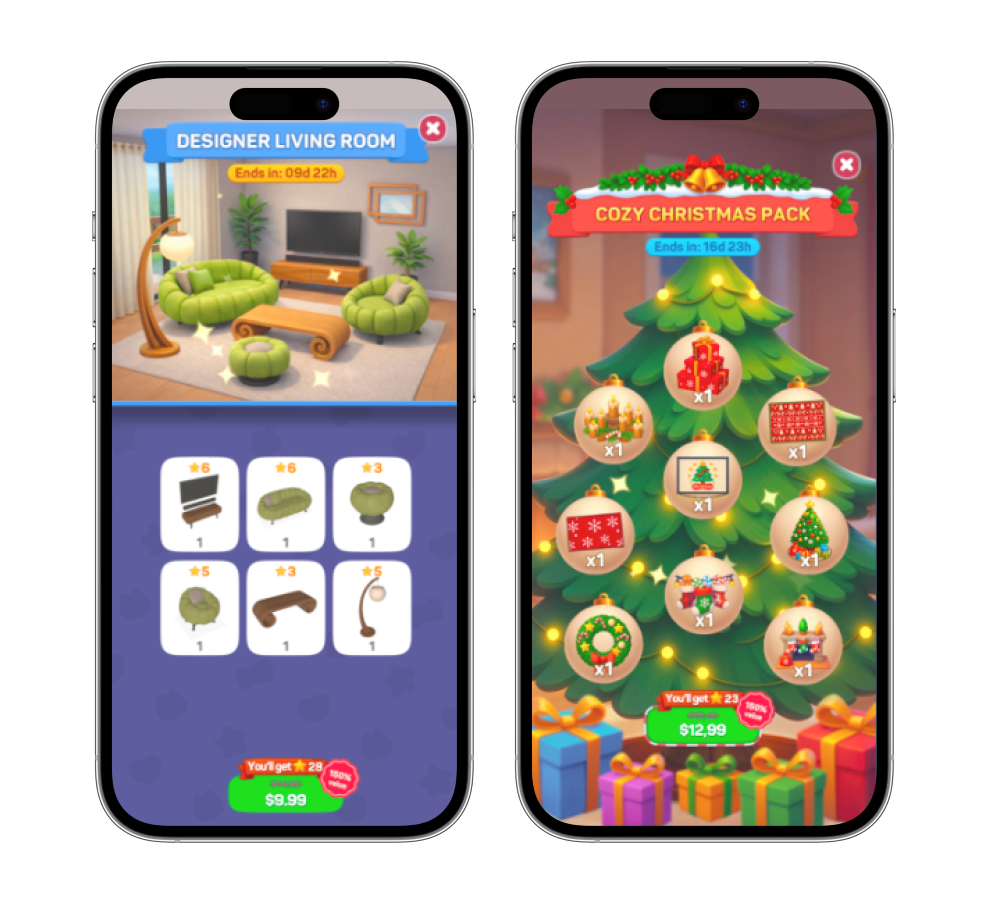
The result of these changes was significant, leading to a 15% increase in D7/D14 ROAS and a 50/50 IAP-IAA split, with late game players driving most of the revenue.
It’s about the friends you make along the way
Strong concepts and sticky ideas can only take you so far in the current mobile game market - profitable success relies on deep expertise and a surgical approach to balancing gameplay, the economy, and progression.
The tight teamwork between Supersonic and the UGI team at each stage of the game’s development and launch was what ultimately ensured Design Family Life could succeed.
While the Supersonic team provided the core idea and design direction, UGI LAB brought execution, creativity, and daily iteration. This collaboration was super tight, with game designers, studio managers, and game economists from Supersonic working together with UGI LAB.
The combined bench of Supersonic experts and talented UGI developers analyzed every aspect of the game to refine and iterate on the core loop, keeping it consistent with player motivations throughout. The result is a scalable, sticky life-sim that proves when developer creativity meets data-driven publishing expertise, the potential for growth is massive.
Let's put these tips to good use
Publish your game with Supersonic